







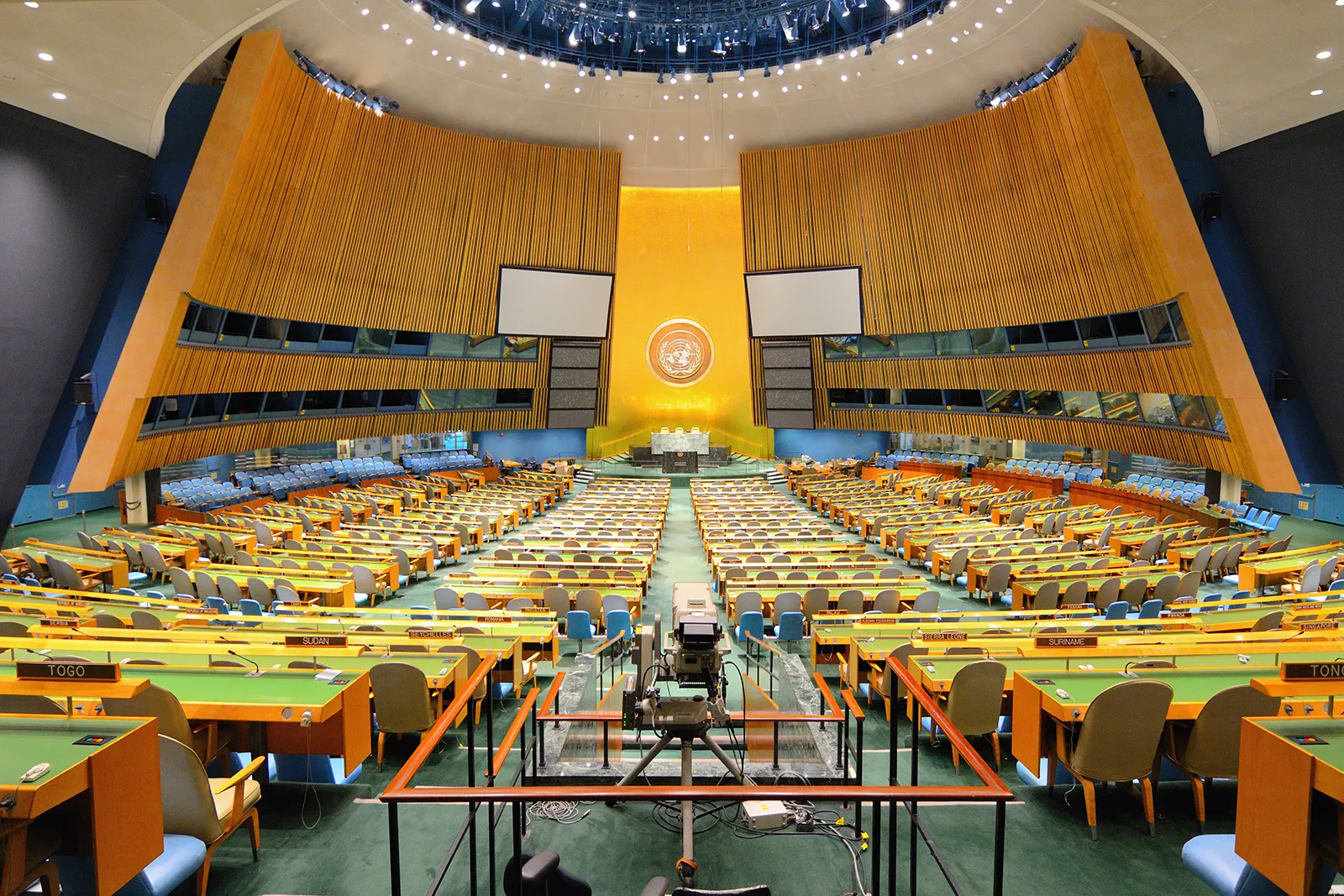
The UN Secretary-General race has reached a critical stage after the latest Security Council straw poll failed to produce a candidate acceptable to all five permanent members. Former Costa Rican Vice President Rebeca Grynspan emerged as the narrow frontrunner in the October 16 vote, but opposition from veto-wielding powers has left the selection process uncertain.
The United Nations is searching for a successor to António Guterres, whose second five-year term ends on December 31, 2026.
The next Secretary-General is scheduled to take office on January 1, 2027, at a time when the organization faces ongoing armed conflicts, financial pressures, and growing disagreements among major powers.
Despite months of consultations and six informal Security Council ballots, no candidate has yet secured the support required to advance toward formal appointment.
The latest results highlight the difficulty of reaching agreement among countries with competing geopolitical interests.
UN Secretary-General Race: Security Council Vote Ends Without Consensus
The Security Council held its sixth informal straw poll on October 16, introducing an important change to the voting procedure.
For the first time in the current selection process, color-coded ballots distinguished the positions of the five permanent members from those of the ten elected members.
The five permanent members — China, France, Russia, the United Kingdom, and the United States — possess veto powers that can prevent a candidate from receiving the Council’s formal recommendation.
In the informal polls, members indicate whether they encourage or discourage each candidacy, or express no opinion.
Although these ballots are not binding decisions, they provide an indication of which candidates could face opposition during a formal vote.
The October 16 results showed that every remaining candidate received at least two discouraging votes from permanent members.
Consequently, no contender emerged with a clear path to appointment.
The result has increased speculation that additional candidates could enter the race before the end of the year.
Rebeca Grynspan Emerges as Narrow Frontrunner
Rebeca Grynspan, a Costa Rican economist and former vice president, received the strongest overall support in the latest informal vote.
According to reported results, Grynspan obtained nine encouraging votes, five discouraging votes, and one expression of no opinion.
Two of the discouraging votes came from permanent Security Council members.
Her performance placed her ahead of the other candidates, but it did not resolve the central obstacle facing the selection process.
A candidate needs more than broad support among the Council’s 15 members. The eventual recommendation must also avoid a veto from any permanent member.
Grynspan has emphasized the need for institutional reform, including reducing bureaucracy, eliminating overlapping responsibilities, and strengthening the United Nations’ ability to respond to international crises.
She has also argued that the organization must become more willing to pursue difficult diplomatic initiatives, even when success is uncertain.
If selected, Grynspan would become the first woman to lead the United Nations in its more than 80-year history.
However, the latest vote demonstrates that her candidacy still faces significant diplomatic challenges.
Other Leading Candidates Face Similar Obstacles
Grynspan is not the only contender attracting substantial support.
Carolyn Rodrigues-Birkett, Guyana’s ambassador to the United Nations, received eight encouraging votes, six discouraging votes, and one expression of no opinion in the October 16 poll.
Two permanent members registered opposition to her candidacy.
Rafael Grossi, the Argentine diplomat who heads the International Atomic Energy Agency, received a broadly comparable result.
Both candidates remain significant participants in the selection process, but neither has demonstrated the level of support needed to overcome potential vetoes.
Other contenders have struggled to attract sufficient backing.
The lack of a decisive candidate raises questions about whether the Security Council will continue negotiating among the existing contenders or consider additional nominations.
Historically, leadership contests at the United Nations have sometimes changed direction after early frontrunners encountered resistance.
Why the Five Permanent Members Hold Decisive Power
The process of selecting the United Nations Secretary-General is governed by Article 97 of the UN Charter.
Under this provision, the General Assembly appoints the Secretary-General following a recommendation from the Security Council.
For a recommendation to proceed, a candidate must secure at least nine affirmative votes from the 15-member Council and avoid a veto from any of its five permanent members.
This gives China, France, Russia, the United Kingdom, and the United States a decisive role in the selection.
The arrangement reflects the institutional structure established after the Second World War.
Supporters argue that requiring agreement among major powers helps ensure that the Secretary-General can work with the countries most influential in international security decisions.
Critics contend that the system gives a small group of governments disproportionate influence over the leadership of an organization representing 193 member states.
The latest selection difficulties have renewed attention to this longstanding debate.
Informal Opposition Is Not Yet a Formal Veto
An important distinction exists between the current straw polls and a formal Security Council decision.
A discouraging ballot from a permanent member signals potential opposition, but it does not automatically constitute a formal veto.
Countries can reconsider their positions during subsequent negotiations.
Candidates may also modify their diplomatic approaches or seek additional support.
Nevertheless, multiple negative indications from permanent members suggest that reaching consensus could prove difficult.
Growing Pressure to Select a Woman
The 2026 leadership contest has also attracted attention because the United Nations has never appointed a woman as Secretary-General.
Since the organization’s establishment in 1945, every Secretary-General has been male.
Governments and civil society organizations have increasingly called for greater gender representation in the selection process.
Several women have participated in the current race, including Grynspan and Rodrigues-Birkett.
Supporters of appointing a woman argue that the decision would represent an important milestone for an institution that promotes gender equality internationally.
Others emphasize that the selection should prioritize diplomatic experience, leadership abilities, independence, and the capacity to build consensus.
These considerations are not necessarily mutually exclusive.
The eventual decision will depend on whether a candidate can secure sufficient political support while demonstrating the ability to lead a complex international organization.

UN Leadership Transition Comes Amid Global Challenges
The next Secretary-General will inherit an institution confronting significant political and financial pressures.
Armed conflicts continue to challenge international peacekeeping and diplomatic efforts.
Disagreements among permanent Security Council members have complicated responses to several major international crises.
At the same time, the United Nations faces pressure to improve efficiency and demonstrate the effectiveness of its programs.
Funding constraints have intensified discussions about institutional reform.
The next leader will need to balance competing priorities, including conflict prevention, humanitarian assistance, sustainable development, climate cooperation, and organizational management.
The ability to maintain working relationships with major powers while preserving the independence of the Secretary-General’s office will be especially important.
Financial Pressures and Institutional Reform
Budgetary difficulties have become a central concern for the United Nations.
Changes in contributions from major donor countries and broader funding uncertainty have placed pressure on various UN activities.
The next Secretary-General may need to oversee spending reductions, administrative reforms, and changes in organizational priorities.
However, reducing costs without weakening essential humanitarian and diplomatic functions will be challenging.
The selection process therefore has implications beyond diplomatic prestige.
It will help determine the leadership approach adopted during a period of considerable institutional uncertainty.
Could New Candidates Enter the Race?
The absence of consensus has opened the possibility of new nominations.
Under the selection process, candidates are formally nominated by United Nations member states.
A new contender would still need to build support among elected Security Council members and avoid opposition from the permanent five.
With the end of Guterres’ term approaching, time is becoming an increasingly important factor.
Diplomatic negotiations may intensify as governments seek a candidate capable of bridging existing divisions.
However, a compromise candidate would not automatically guarantee effective leadership.
The eventual Secretary-General must also demonstrate the independence, credibility, and administrative capabilities required for the position.
What Happens Next in the UN Secretary-General Selection?
The UN Secretary-General race is entering a decisive phase as Security Council members seek a compromise candidate capable of securing broad international support. Further informal consultations and straw polls may take place as Security Council members attempt to narrow the field.
Once the Council agrees on a candidate, it must adopt a formal recommendation.
The General Assembly then considers that recommendation and appoints the next Secretary-General.
Although the process is expected to conclude before the end of 2026, the latest vote shows that a final decision has not yet been reached.
The next phase will depend on whether permanent members soften their opposition, existing candidates gain additional support, or new contenders emerge.
The outcome will shape the United Nations’ leadership at a particularly challenging moment for international cooperation.
UN Secretary-General Race: A Test of International Cooperation
The stalled race for the next United Nations Secretary-General illustrates the difficulties of achieving consensus among major powers.
Rebeca Grynspan currently holds a narrow lead in the informal voting, but opposition from permanent Security Council members prevents any candidate from claiming a clear advantage.
The leadership transition also raises broader questions about the future of multilateral diplomacy, institutional reform, and the representation of women in senior international positions.
As the December 31 deadline approaches, governments face increasing pressure to reach an agreement.
Ultimately, the selection will test whether countries with competing interests can unite behind a leader capable of guiding the United Nations through a period of global uncertainty.
Editorial note: This report reflects developments reported on October 16–17, 2026. Informal Security Council voting results do not constitute a final appointment decision.
Sources & References
| Source | Article / Reference |
|---|---|
| Reuters | Grynspan Holds Lead for Next UN Chief as Race Enters Decisive Stage |
| Associated Press | Latest Vote Shows No Candidate Has Required Support |
| Security Council Report | Sixth Security Council Straw Poll |
| United Nations | Selection and Appointment of the Next Secretary-General |