





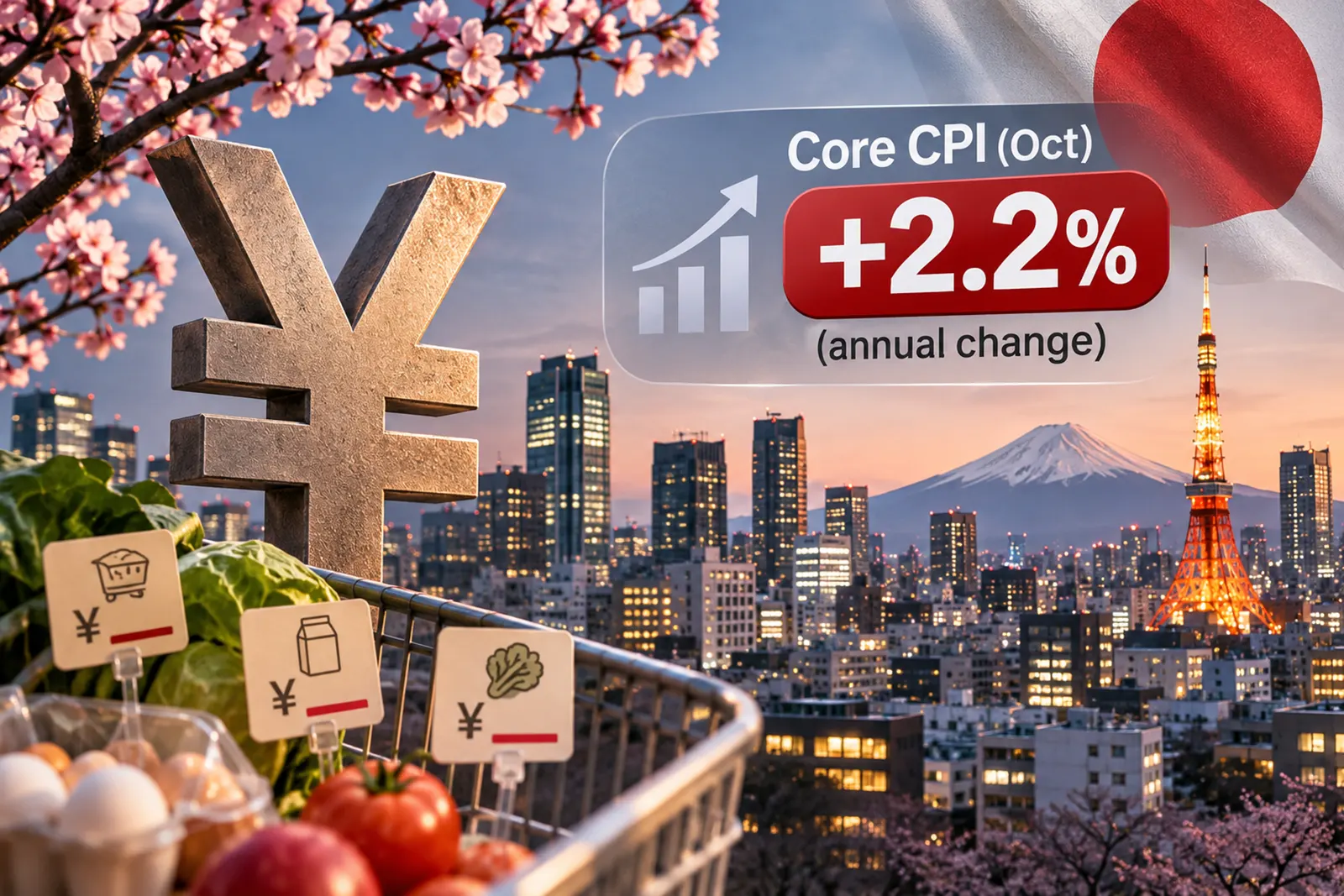

Japan core inflation accelerated to 2.2% year over year in October 2026, according to data reported on November 20. The reading keeps underlying price growth above the Bank of Japan’s 2% target and adds to expectations that policymakers may raise interest rates in December.
Japan Core Inflation: What the October Data Shows
The core consumer price index, which excludes fresh food, rose 2.2% from a year earlier, slightly below economists’ 2.3% forecast. A separate measure excluding fresh food and fuel also increased 2.2%, suggesting price pressure is not confined to energy alone.
Reuters reported that the Bank of Japan is due to conclude its next two-day policy meeting on December 18. Some market participants expect its policy rate to rise from 1.25% to 1.5%, but that remains a forecast rather than a decision.
Why Inflation Matters for the Bank of Japan
Persistently above-target inflation can strengthen the case for tighter monetary policy, especially if wages and domestic demand continue to support price increases. However, the central bank must also weigh the risk that higher borrowing costs slow consumption and investment.
The distinction between headline and core measures matters: changes in volatile food or fuel prices may temporarily move headline inflation, while broader price increases can be more relevant to medium-term policy decisions.
What Investors Should Watch Next
The December policy meeting, upcoming wage figures, household spending and yen movements could help determine whether inflation remains persistent. Currency traders and bond investors may react to changes in expectations even before any policy announcement.
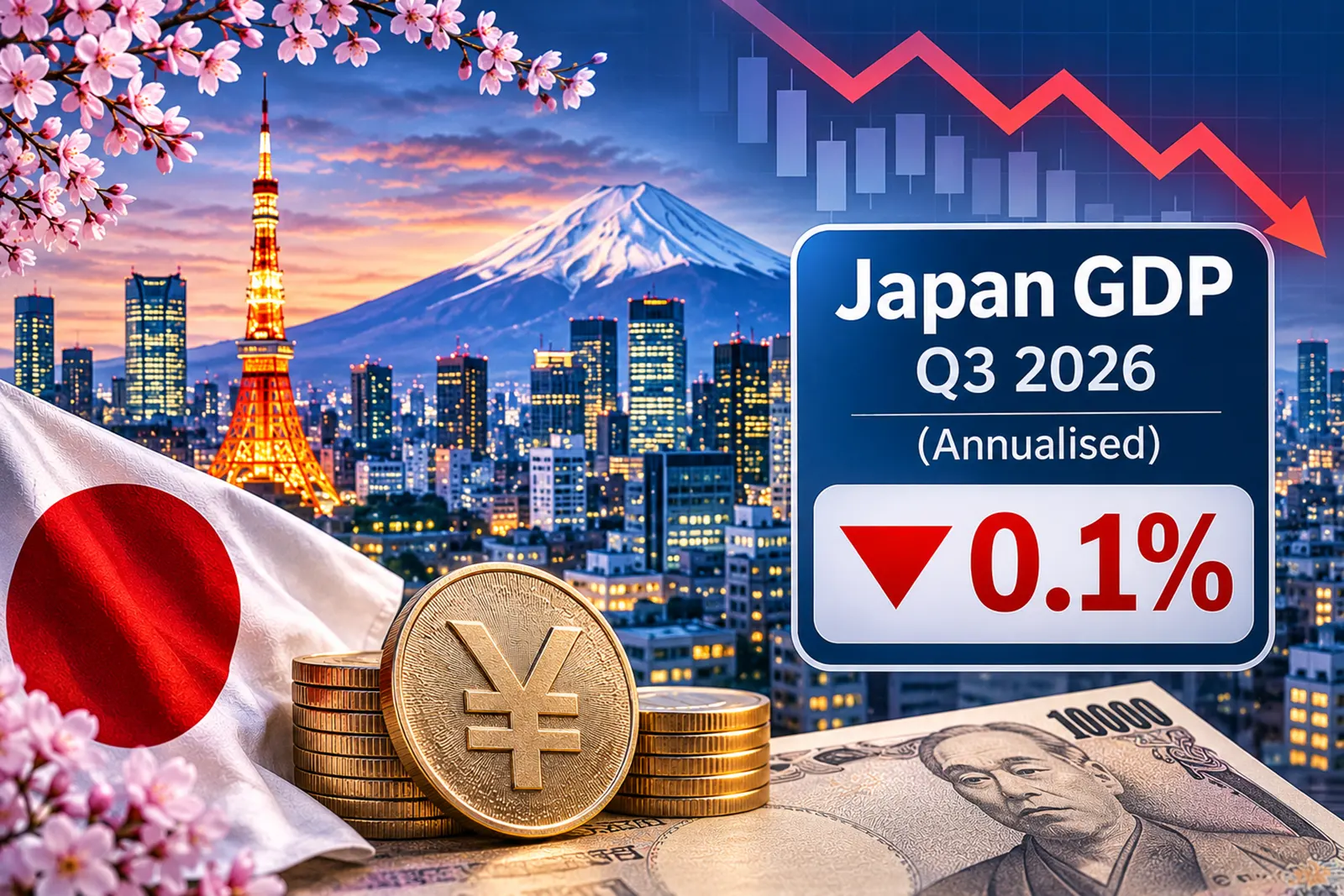
For broader context on Japan’s economy, read our Japan GDP contraction analysis, which examines household consumption and investment.
How to Read Japan’s October Inflation Figures
The 2.2% October reading compares consumer prices with the same month a year earlier. It describes how much the index changed over twelve months. To judge whether price increases are gaining momentum now, readers can compare the annual figure with the latest month-to-month changes and look at which categories contributed most. A change in the year-earlier comparison can move the annual rate even when the latest monthly increase is modest.
The two core measures answer slightly different questions. Excluding fresh food reduces the effect of swings in those prices, while also excluding fuel helps show how the index behaves without another volatile category. Both measures came in at 2.2% in October. A breakdown of goods and services would help show whether those matching readings reflect broad price increases or different movements that happen to produce the same headline figure.
What the BOJ Will Weigh Before Its Next Decision
Wage growth matters because sustained pay increases can support household spending and give companies room to pass on labor costs. If consumer prices rise faster than wages, household purchasing power comes under pressure. That makes retail and household spending data useful alongside Japan core inflation when judging whether domestic demand is strong enough to sustain price growth.
The yen is another part of the picture. A weaker currency can raise the cost of imported goods in yen terms, although the timing and extent of pass-through vary across businesses. In bond and currency markets, the response to the December meeting will depend partly on what investors have already priced in. The BOJ’s explanation of how it sees wages, spending and prices may matter as much as the rate decision itself.
Bottom Line
Japan core inflation in October reinforces the possibility of another Bank of Japan rate increase, but the timing and scale remain uncertain. Investors should distinguish confirmed price statistics from market forecasts.
Financial disclaimer: This article is for informational and educational purposes only and does not constitute investment advice.
Sources
Reuters — Japan’s core inflation accelerates in October (November 20, 2026)