







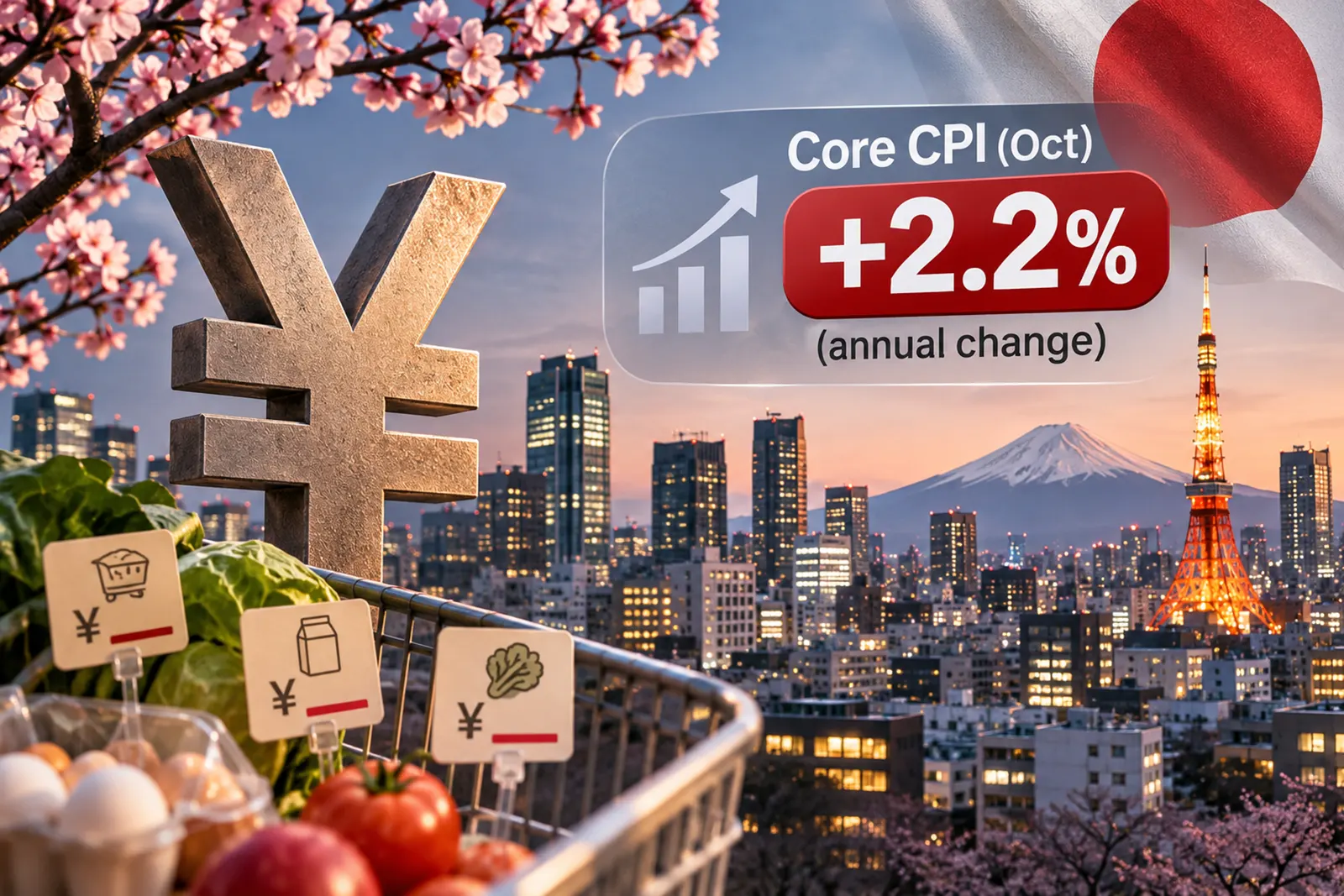
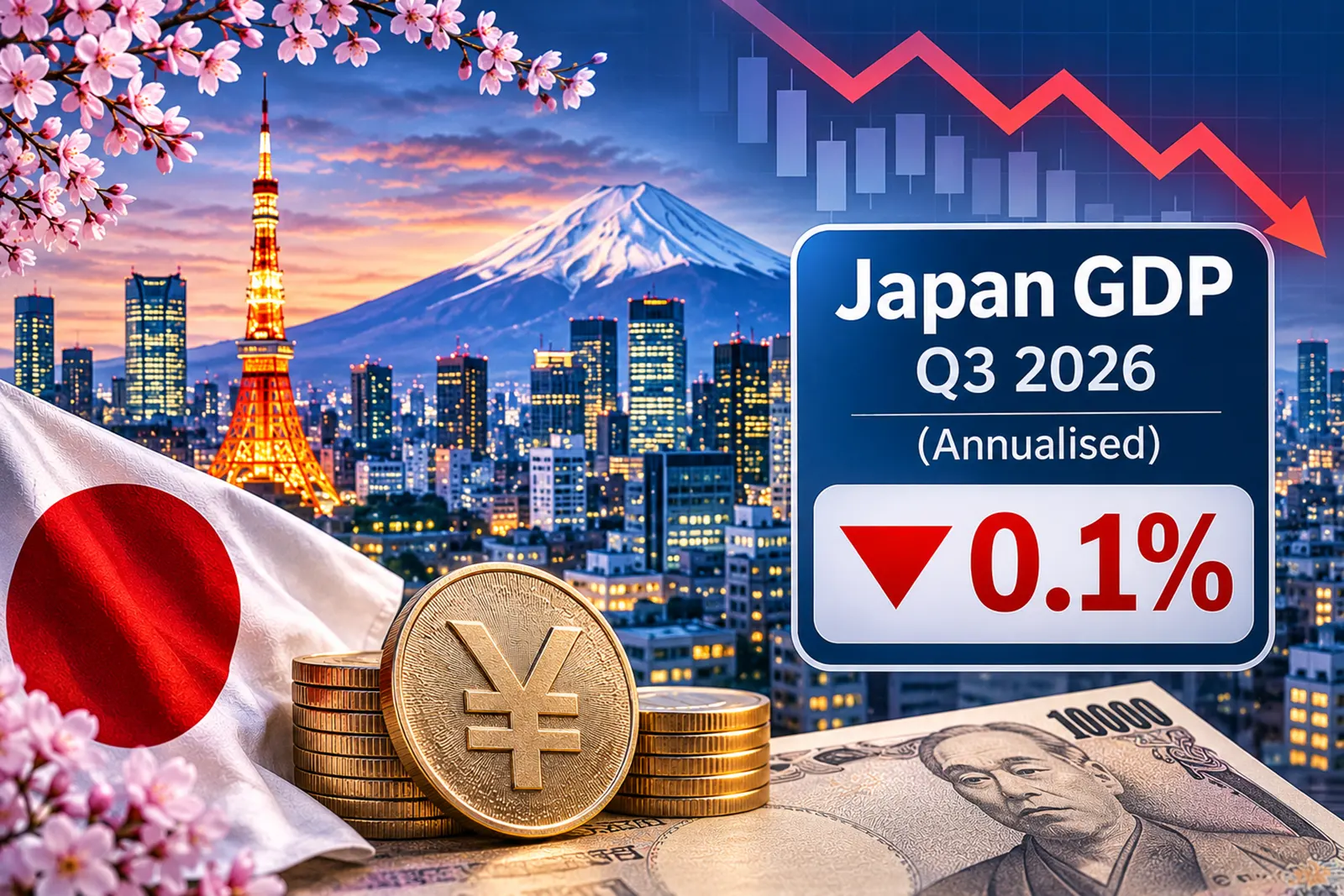
The Japan GDP contraction reported on November 16, 2026, highlights the strain that higher living costs are placing on households. Japan’s economy shrank at an annualised rate of 0.1% in the July–September quarter, missing economists’ expectations for 0.3% growth, according to official figures reported by Reuters.
Japan GDP Contraction: What the Latest Figures Show
The third-quarter decline was Japan’s first in four quarters, following a revised 1.7% annualised expansion in the preceding period. The headline rate is annualised: it represents the quarterly change expressed at an annual pace, not a 0.1% fall in output during the quarter itself.
On a non-annualised basis, output slipped 0.02%. Although the headline decline was small, the composition of growth revealed a sharper contrast between household demand and business investment.
Household Spending and Investment in the Japan GDP Contraction
Private consumption, accounting for more than half of Japan’s economic output, fell 0.3% during the quarter, worse than the 0.2% decline economists had expected. Elevated prices, adverse weather and weaker demand for cars and air conditioners contributed to the pullback.

By contrast, capital expenditure increased 1.6%, slightly above forecasts of 1.5%. Investment in automation and artificial intelligence-related projects helped support business spending even as consumers remained cautious.
Energy Imports and Inflation Complicate the Outlook
Net external demand reduced GDP growth by 0.6 percentage point. Higher energy imports were an important factor, as Japan adjusted procurement following supply disruptions associated with conflict in the Middle East.
Japan’s dependence on imported energy means that international oil prices and exchange-rate movements can feed into household bills and corporate costs. Rising wages may support purchasing power, but their impact depends on whether pay gains outpace inflation.
What the Data Could Mean for Bank of Japan Rates
The weak GDP result does not automatically imply a pause in monetary tightening. The Bank of Japan must weigh softer consumption against persistent price pressures. Some economists still anticipate another interest-rate increase as early as December, while others caution that continued household weakness could strengthen arguments for a slower pace.
Investors following Japan’s economy should distinguish between the GDP headline and the underlying drivers: household spending, business capital investment, import costs and wage trends can point in different directions. For broader context, see Temel Academy’s recent analysis of Germany’s growth outlook.
What to Watch Next
The next inflation and wage reports, consumer spending releases, and Bank of Japan communications will help clarify whether the slowdown is temporary or more persistent. A recovery in real household incomes would support domestic demand, while further energy-cost increases could delay it.
How to Read the Japan GDP Contraction
The Japan GDP contraction brings together several measures that answer different questions. Real GDP tracks changes in the volume of goods and services produced after adjusting for prices. Household purchasing power depends on how earnings change relative to the prices people actually pay. A small change in aggregate output can therefore coexist with a more noticeable squeeze on household budgets.
The contribution from net external demand is also distinct from the growth rate of any one component. Imports are subtracted in the GDP calculation because they are produced abroad, even when households and businesses in Japan buy them. For a fuller reading of the quarter, compare household spending, business investment and external demand separately. That makes it easier to see which parts of the economy are driving the headline.
Bottom Line
The Japan GDP contraction masks a more significant divide: household demand is weakening even as firms continue investing. The key question is whether wages and policy support can restore consumer spending without allowing inflation pressures to persist.
Sources
Reuters, November 16, 2026 — Japan’s economy unexpectedly shrinks as inflation squeezes households.
Financial Disclaimer
This article is for informational and educational purposes only and does not constitute financial or investment advice. Economic data may be revised, and markets involve risk. Always conduct independent research before making financial decisions.