







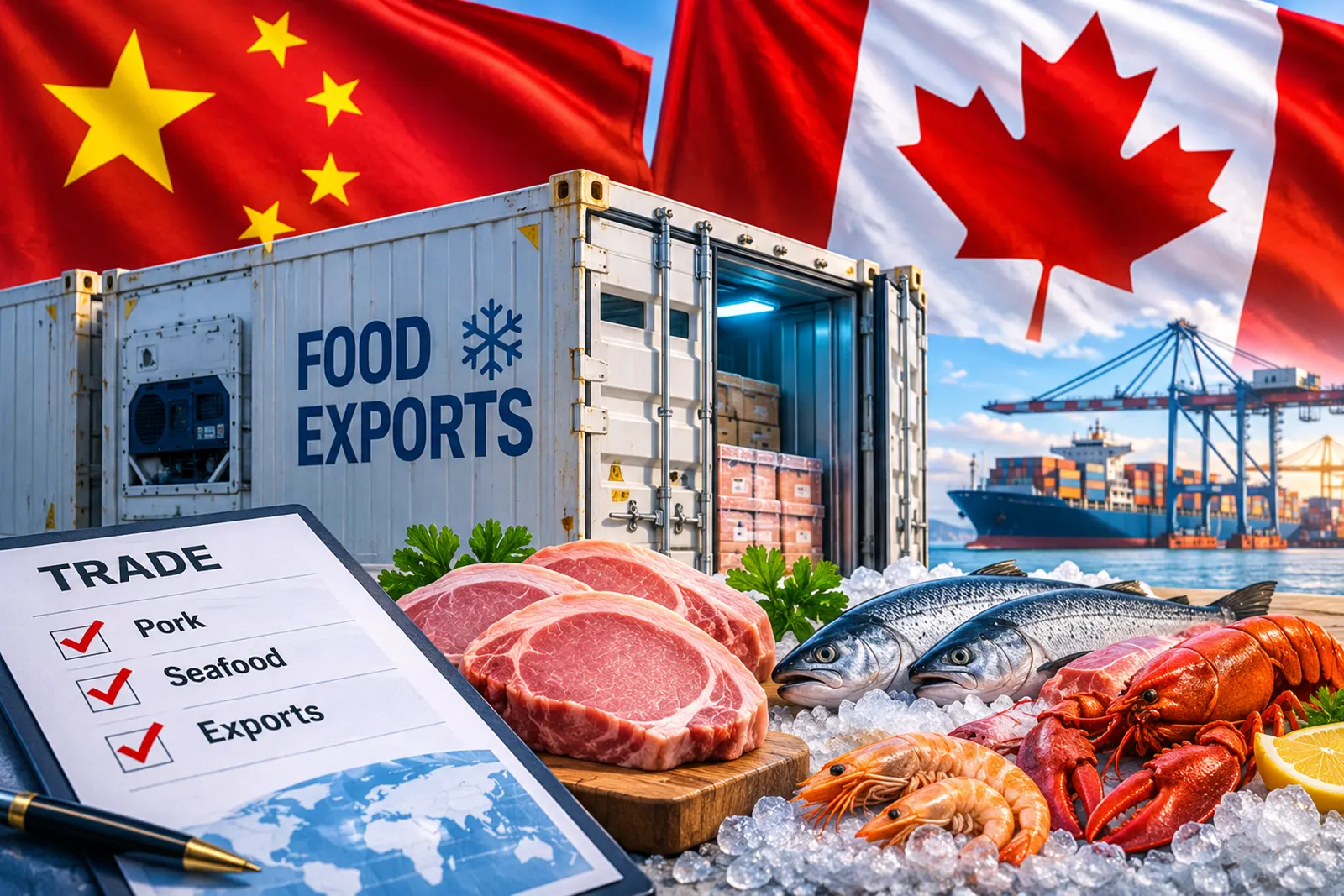
China Canada tariff relief expanded on November 17, 2026, with Beijing agreeing to lower tariffs on additional Canadian pork, fish and seafood exports. The announcement followed a meeting between Canadian Prime Minister Mark Carney and Chinese President Xi Jinping in Shenzhen, according to Reuters.
What the China Canada Tariff Relief Covers
Canada’s prime minister’s office said the Chinese measures cover around C$400 million in Canadian pork, fish and seafood exports. In return, Canada agreed to extend by two years remission measures covering certain Chinese steel and aluminum products that were scheduled to expire at the end of 2026. The announcement concerns specific goods and should not be interpreted as the removal of all bilateral trade restrictions.
Carney described relations as more predictable and stable. He also said Canada was ahead of schedule in its ambition to increase exports to China by 50% by the end of the decade. That ambition is a policy target, not a confirmed increase already achieved.
Why the Trade Announcement Matters
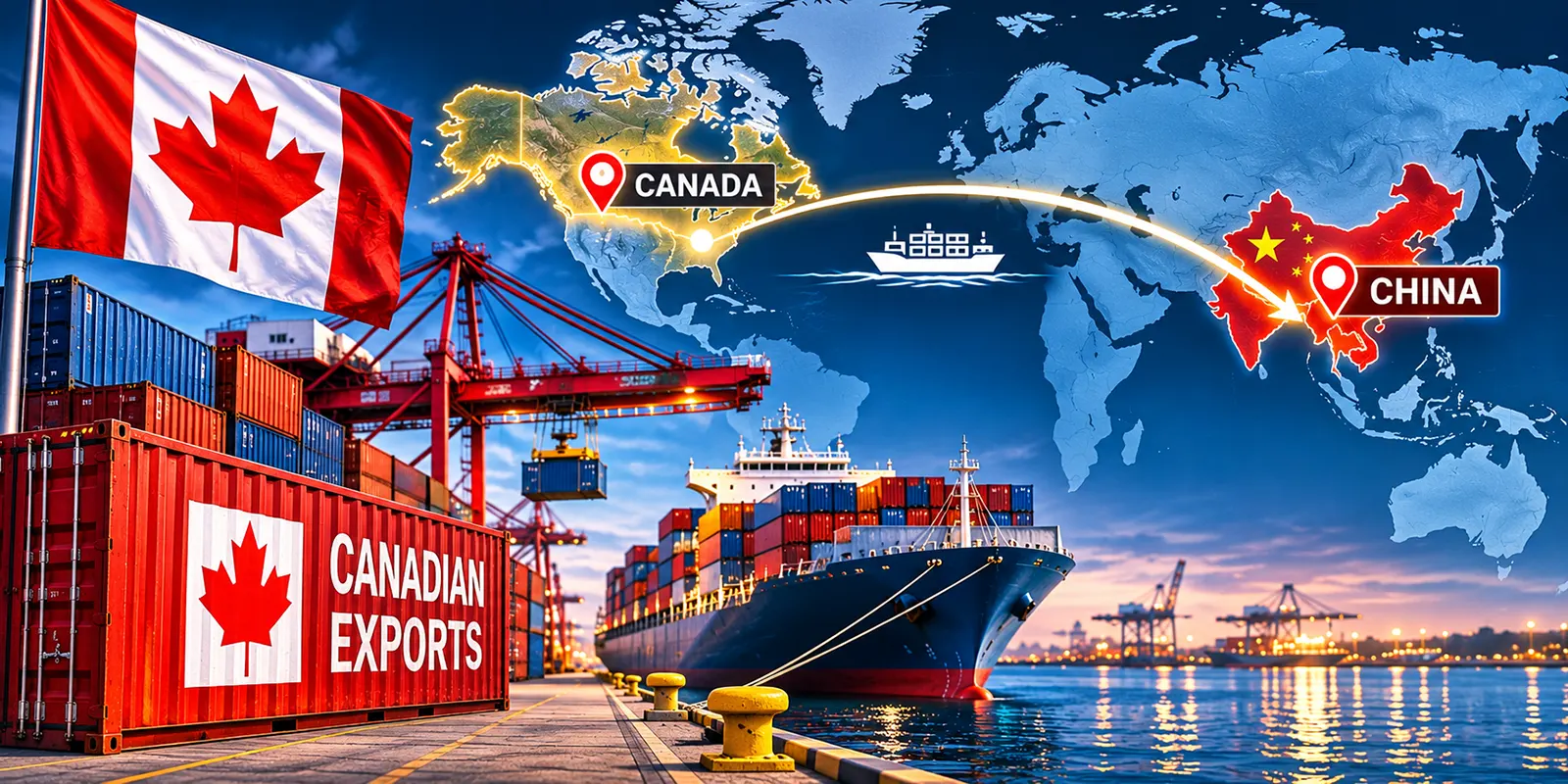
Lower import duties can improve the competitiveness of Canadian agricultural and seafood exporters in the Chinese market, although actual sales will depend on demand, logistics, regulatory requirements and the final tariff schedules. For Canadian importers and manufacturers, the extension of steel and aluminum remission measures may help preserve existing arrangements for certain Chinese products.
The reciprocal steps also illustrate how governments can make selective trade concessions without resolving broader disagreements. Businesses should distinguish an announced tariff change from its implementation date and product-level eligibility before making commercial decisions.
Diplomacy Ahead of the APEC Summit
The meeting took place as leaders gathered in Shenzhen for the Asia-Pacific Economic Cooperation summit. The two countries have been working to stabilize ties, and Xi said exchanges and cooperation had resumed following an earlier agreement to advance their strategic partnership. The broader diplomatic environment remains sensitive to trade policy, security disputes and global supply-chain shifts.
What Investors and Exporters Should Watch
The next checkpoints are official customs notices, effective tariff rates, product classifications and trade-flow data. Canadian agricultural exporters may benefit if lower duties translate into sustained Chinese orders. Steel and aluminum market participants should examine the precise scope of Canada’s remission extension rather than assuming it applies across the sector.
For context on the wider economic environment, readers can explore Temel Academy’s economy coverage and global markets reporting. Neither the announcement nor a single trade headline establishes a reliable short-term market forecast.
How Tariff Relief Can Affect Export Costs
A tariff is generally paid by the importer when goods clear customs. When a duty falls, the savings can show up in different places. An importer may pass them through to customers, use them to offset freight and storage costs, or negotiate a different price with the exporter. For refrigerated products, transport and cold storage still contribute to the delivered cost.
When assessing the China Canada tariff relief, it helps to distinguish the value of eligible exports from the potential increase in sales. The former describes trade covered by the measures. The latter depends on how buyers and suppliers respond once the new terms apply. Comparing shipment values with physical volumes can help show whether changes reflect larger orders, different prices or a mix of both.
Bottom Line
China Canada tariff relief marks a targeted easing of trade barriers for selected Canadian food exports, alongside a Canadian extension of certain industrial-product remission measures. Its economic significance will depend on implementation details and whether trade volumes respond.
Sources
Reuters — China-Canada relations more stable, Carney says as he meets Xi (November 17, 2026)
Financial disclaimer: This article is for informational and educational purposes only and is not investment, trading or financial advice. Markets and trade policies can change; verify official announcements before making decisions.