








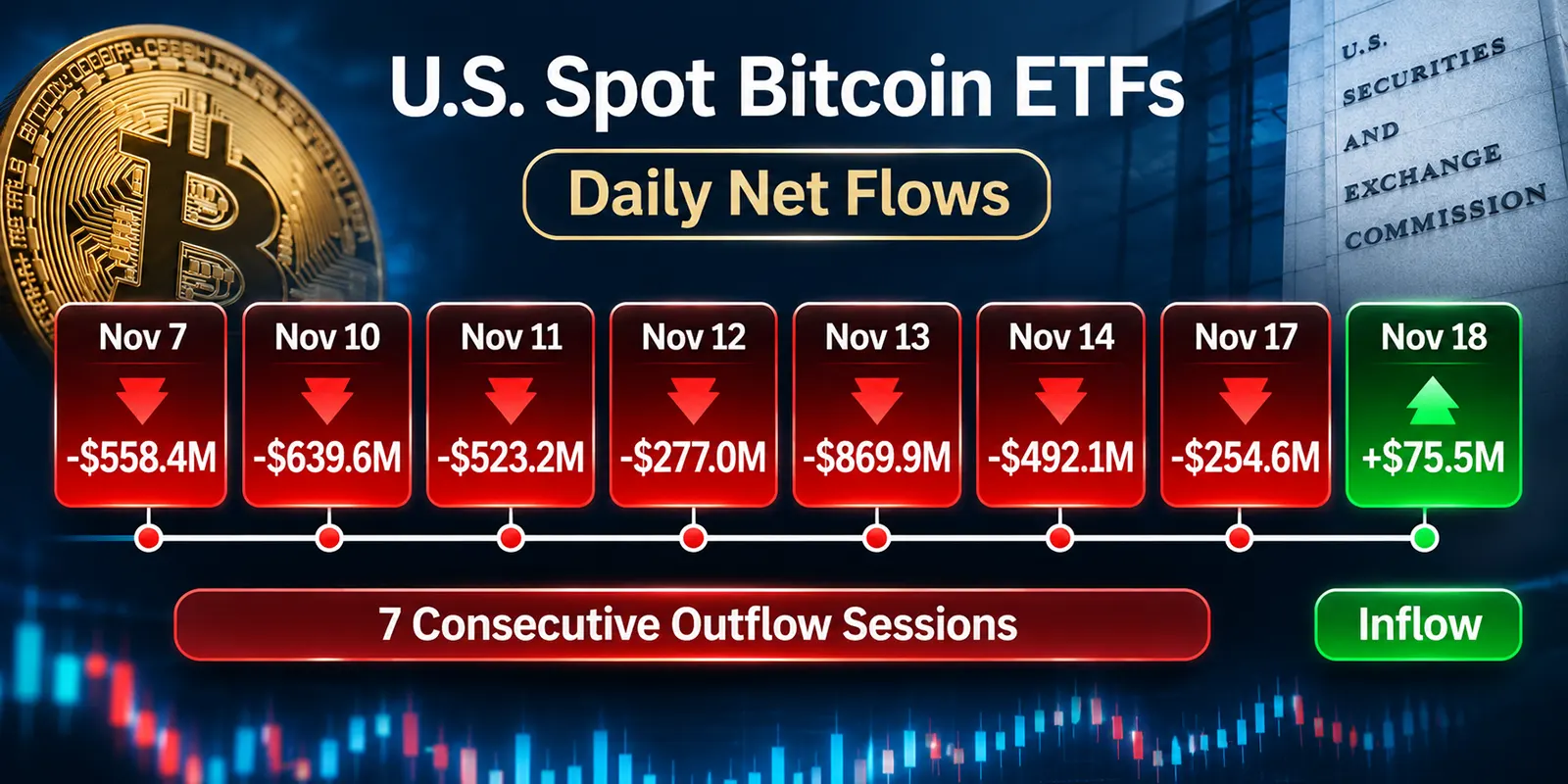
The Bitcoin ETF outflow streak ended on Monday, November 16, as U.S. spot bitcoin exchange-traded funds recorded approximately $7.9 million in net inflows after seven consecutive sessions of withdrawals. Yet bitcoin remained near $64,000 on November 17, showing that a modest improvement in fund flows had not translated into a decisive price recovery.
CoinDesk reported the fund-flow reversal on November 17, citing data from Farside Investors. The inflow is small relative to the broader market, and one positive day does not establish a lasting change in institutional demand.
Bitcoin ETF Outflow Streak: What Changed?
The seven-day run of withdrawals gave way to a net positive session of about $7.9 million on November 16. Spot bitcoin ETFs offer investors exposure to the cryptocurrency through conventional brokerage accounts, so daily creations and redemptions can provide one measure of demand. However, the figures are net flows rather than a direct count of investors buying bitcoin on exchanges.
The first positive reading after the Bitcoin ETF outflow streak is best evaluated alongside several subsequent sessions. Persistent inflows could support confidence, whereas renewed redemptions would indicate that investors remain cautious.
Why Bitcoin Remained Under Pressure
According to CoinDesk’s November 17 market report, bitcoin was trading around $64,200 during its coverage, with its rebound from a weekend low near $62,000 losing momentum. The report also noted bitcoin trading below a roughly $68,000 200-week moving average. These are time-specific observations, not current live prices.
The gap between ETF demand and price action matters. Bitcoin also responds to derivatives positioning, macroeconomic expectations, liquidity conditions and broader risk appetite. Even a return to modest ETF inflows may be insufficient to offset selling elsewhere in the market.
What Traders and Long-Term Investors Can Watch
The next useful indicators are the direction and consistency of daily ETF flows, whether bitcoin can sustain a recovery above nearby resistance areas, and whether volatility subsides. Price levels should be reassessed on a live chart rather than treated as permanent support or resistance.
For a practical introduction to interpreting market levels, see Temel Academy’s trading education and technical analysis resources. Readers can compare price behavior with volume and trend indicators instead of relying on a single data point.
Risks and Broader Market Context
ETF inflows do not guarantee a rising bitcoin price. The market remains vulnerable to abrupt liquidations, shifts in interest-rate expectations, exchange-related security concerns and changes in investor sentiment. Crypto assets can experience substantial losses over short periods.
How to Read Fund Flows After the Bitcoin ETF Outflow Streak
Daily net flows combine money moving into and out of the funds. If one fund attracts new money while others see redemptions, the aggregate can be close to zero even when individual funds experience meaningful shifts. The daily total is therefore more informative when read alongside the fund-by-fund figures.
After the Bitcoin ETF outflow streak, a rolling weekly total can help put a single positive session in context. A week with modest daily inflows may tell a different story from a week when one large allocation accounts for nearly all of the gains. Comparing the dates of US fund flows with the times of bitcoin price observations also matters because bitcoin trades outside US market hours.
Bottom Line
The end of the Bitcoin ETF outflow streak is an early sign that fund demand may be stabilizing, but the roughly $7.9 million inflow was modest and bitcoin had yet to show a sustained rebound in the November 17 reporting window. Further sessions of flows and price action are needed before drawing stronger conclusions.
Sources
CoinDesk — November 17, 2026: Bitcoin remains near $64,000 as ETF outflows end
Farside Investors — U.S. Bitcoin ETF flow data
Financial disclaimer: This article is for educational and informational purposes only and does not constitute investment advice. Cryptocurrency markets are volatile; always conduct independent research and consider your risk tolerance.