








Binance withdrawals resume in stages following a $6.3 billion cryptocurrency theft disclosed last week, but the reopening does not yet mean that every asset and network is back to normal. The exchange began restoring access on Sunday, November 1, 2026, after pausing withdrawals to investigate the October 29 breach. Its recovery efforts are now being tested by a sharp rise in customer transfers.
According to Reuters’ November 1 report, Binance recorded roughly $3.64 billion in net customer outflows during the initial reopening period. Binance says it has covered approximately 95% of the affected assets and will absorb the financial cost of the theft rather than passing it to users. Those are company-reported recovery figures, not an independent guarantee that all operational risks have ended.
Why Binance Withdrawals Resume in Phases
In its November 1 security update, Binance said the first phase of withdrawals was scheduled for 06:00–09:00 UTC. The company said it was conducting additional security checks and restoring services network by network, with deposits continuing to operate.
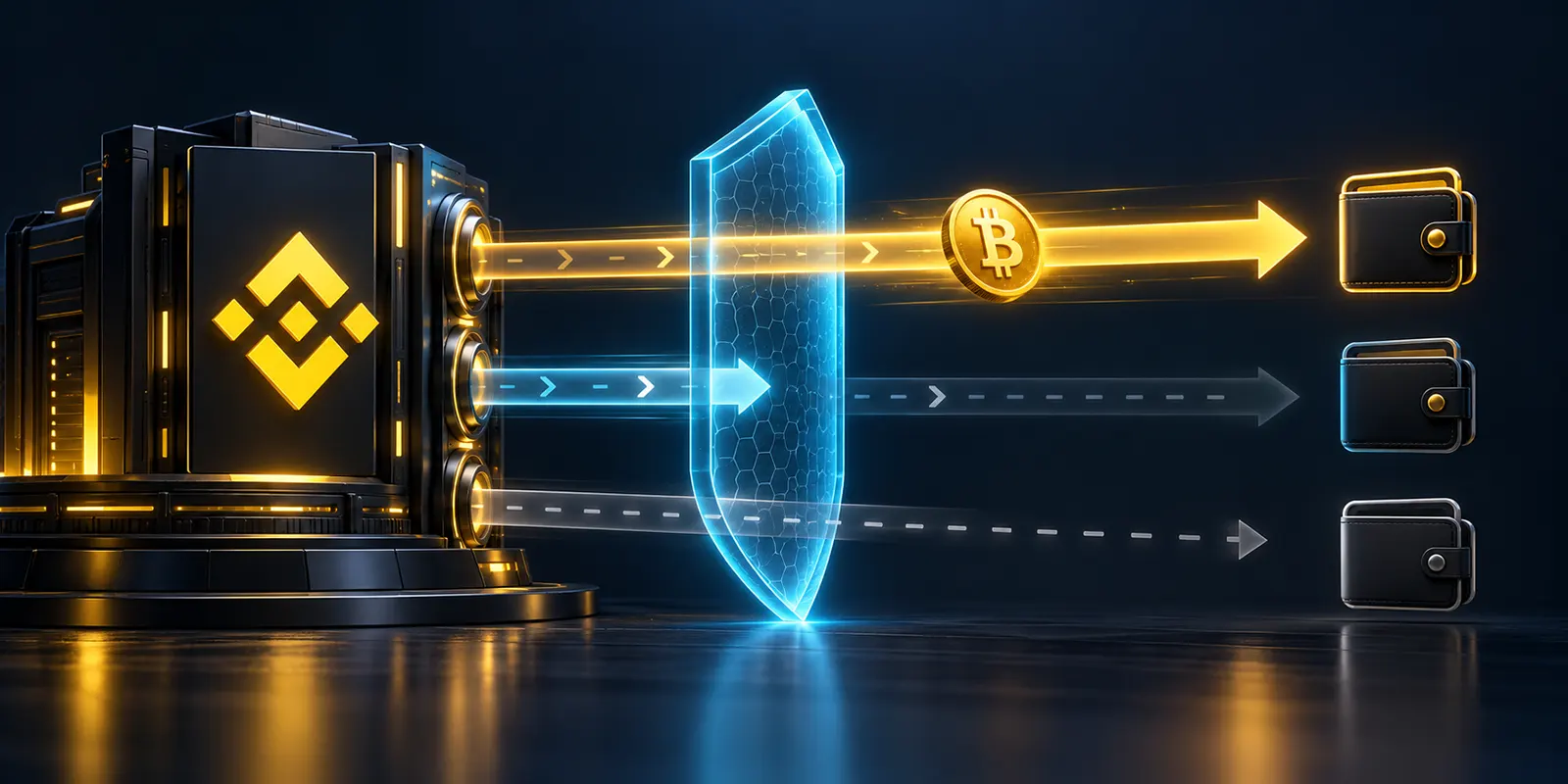
As Binance withdrawals resume, a phased reopening lets the exchange monitor processing loads and the condition of affected systems before returning more services to normal. Binance cautioned that customers could encounter delays or temporary processing failures as supported tokens and networks are brought back online. The announcement therefore should not be read as confirmation that every withdrawal route was immediately available.
Customer Outflows Reach $3.64 Billion as Binance Withdrawals Resume
The initial flow figures underline how quickly confidence can be tested after a major exchange breach. Reuters reported about $4.65 billion in withdrawals and $1.01 billion in deposits over roughly nine and a half hours, leaving net withdrawals of approximately $3.64 billion. That net amount represented about 2.1% of the roughly $171 billion in assets Binance reported holding before the attack.
Gross withdrawals and net outflows are different measures: the former counts funds leaving the platform, while the latter subtracts incoming deposits. Binance said outflows were beginning to stabilize, but a short monitoring window cannot establish how customers will behave over the coming days.
The outflow estimates also require care. On-chain analytics services may count internal wallet movements differently from the exchange’s own figures, so totals from different sources are not necessarily directly comparable.
What Does the 95% Recovery Figure Mean?
Binance said it had procured or otherwise covered about 95% of the assets affected by the attack, up from 90% in its previous update. It identified the remaining 5% as relatively illiquid tokens that could take longer to acquire in sufficient quantities. This replenishment figure should not be confused with the percentage of stolen cryptocurrency that investigators have actually recovered from the attackers.
The exchange said BTC, ETH, USDT, BNB, SOL, USDC, XRP, USD1, RLUSD and ZEC balances were fully backed according to its latest reserve snapshot. It also pledged to meet the entire loss from its own resources and protection arrangements. These statements describe Binance’s commitments and reported reserves; customers should still check the latest asset-specific withdrawal notices and independent developments.
FBI Attributes the Theft to TraderTraitor
In an October 31 advisory, the FBI attributed the theft of more than $6 billion in virtual assets to North Korea-linked cyber activity it calls TraderTraitor. The bureau said investigators had observed stolen assets being converted primarily into ether and warned that additional laundering could involve decentralized finance and instant-swap services.
The attribution is the FBI’s investigative conclusion, rather than a finding established by a court. The security investigation and efforts to trace the stolen assets remain separate from Binance’s decision to fund customer balances.
For the original breach timeline and the exchange’s first response, see Temel Academy’s earlier report on the Binance hack. This follow-up focuses on the subsequent reopening, withdrawal flows and asset replenishment.
What to Watch as Binance Withdrawals Resume
Withdrawal availability and processing times
Customers should verify the current status of their particular token and network through official exchange announcements before assuming that a transfer can be completed. A successful reopening for one asset does not establish availability for every other asset.
Reserve disclosures and the incident review
Binance has said it will publish a fuller post-incident review after its investigation. Investors and customers can compare subsequent reserve updates, service restoration notices and independent reporting with the company’s current commitments. A proof-of-reserves snapshot can provide useful information, but it is not a substitute for a comprehensive assessment of an exchange’s liabilities, security controls and financial position.
Broader market and custody risks
The episode highlights risks that can arise even when the underlying blockchains continue functioning. Exchange security, access to withdrawals, concentration of holdings and liquidity conditions are separate considerations from the price outlook for bitcoin or other tokens. None of these factors alone predicts where crypto prices will move next.
Bottom Line
Binance’s staged return of withdrawals marks progress after the October 29 security breach, but $3.64 billion in reported net outflows shows the scale of the confidence test. The exchange says about 95% of affected assets have been covered and has promised to bear the losses. The next milestones are broader service restoration, replenishment of less-liquid tokens and a detailed account of how the attack occurred.
Sources
Binance — Security Incident Recovery Update #4 (November 1, 2026)
Reuters — Binance withdrawals and customer outflows (November 1, 2026)
FBI — North Korea Responsible for $6 Billion+ Binance Attack (October 31, 2026)
Financial disclaimer: This article is for educational and informational purposes only and is not investment, legal or financial advice. Cryptocurrency markets and custodial services involve significant risks. Verify current information and consider your circumstances before making financial decisions.