





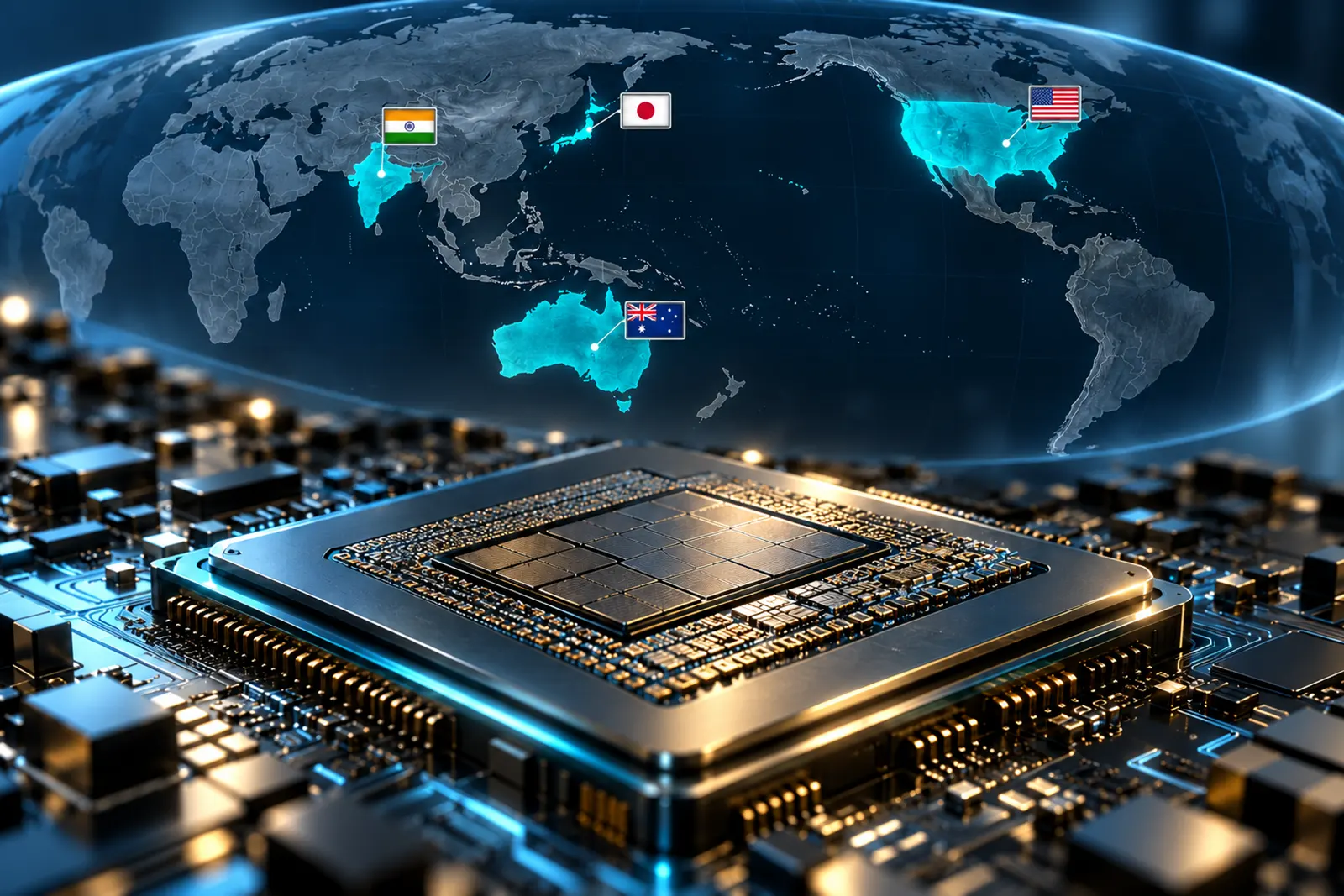
Quad supply chain security moved higher on the diplomatic agenda after the foreign ministers of the United States, Japan, India and Australia met in Atlanta on October 31, 2026. Their joint statement outlined stronger cooperation on critical minerals, semiconductor vulnerabilities and maritime trade routes, alongside an intention to provide more than $85 million in technical and financial assistance for access to trusted artificial-intelligence technologies across the Indo-Pacific.
The meeting took place on the sidelines of the G20 foreign ministers’ gathering. The four governments framed resilient supply chains as a matter of economic security, but their announcement should not be mistaken for proof that all proposed initiatives have already been funded or implemented.
Quad Supply Chain Security Takes Center Stage in Atlanta
The four ministers said they were concerned about economic coercion, arbitrary export restrictions and industrial policies that can disrupt strategically important supply chains. Their joint document did not name China, although Reuters reported that the discussions came amid tensions over China’s restrictions on critical-mineral exports.
U.S. Secretary of State Marco Rubio told reporters that the Quad was not intended as an anti-China coalition. That distinction matters: the statement is a declaration of shared policy priorities, not an announcement of sanctions or a new trade blockade.
Critical Minerals and a $10 Million Recycling Initiative
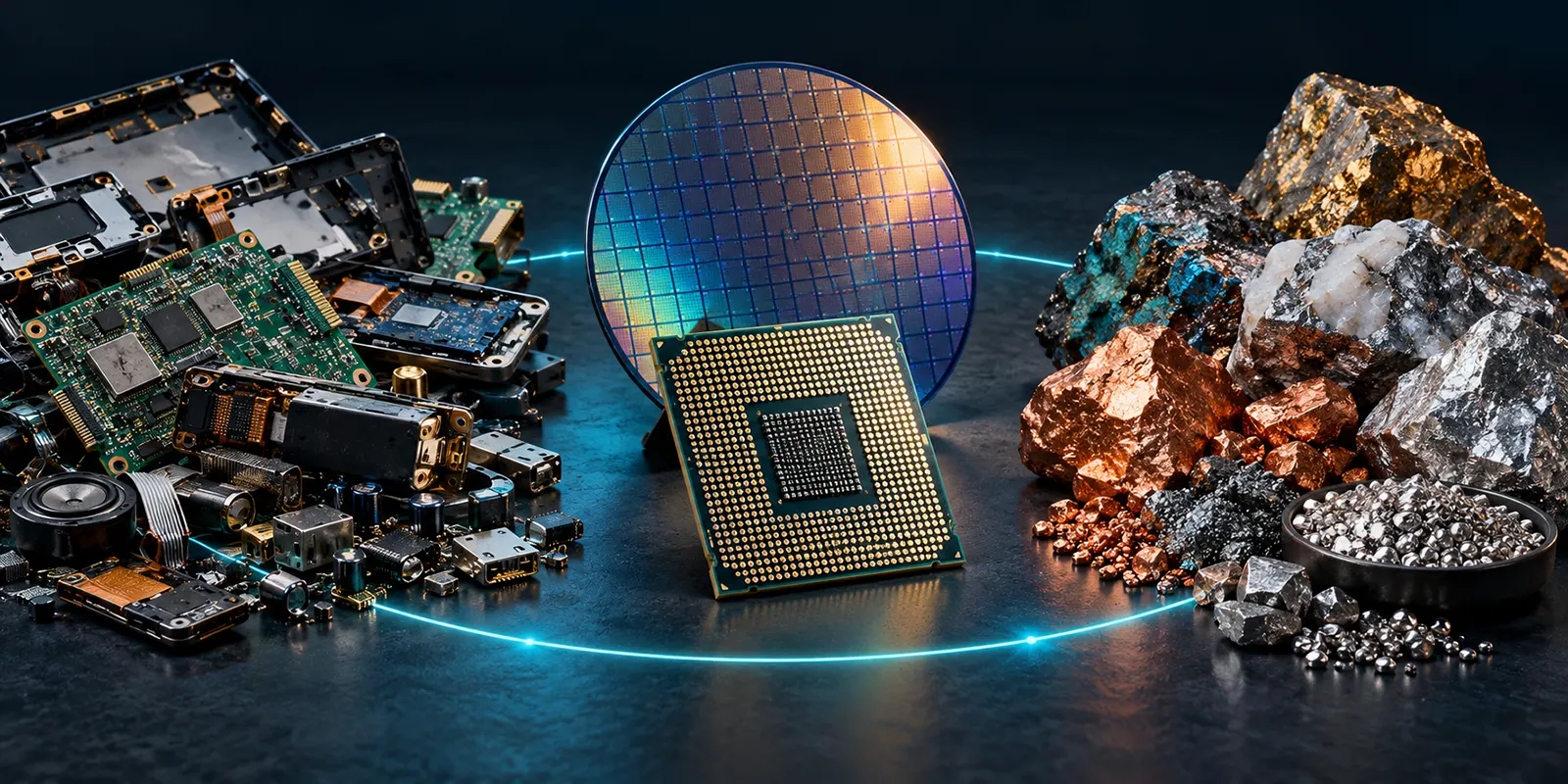
The ministers highlighted work under the Quad Critical Minerals Initiative Framework, announced in May 2026. The plan emphasizes recovering valuable materials from electronic waste and industrial scrap, developing recycling and refining capacity, and reducing dependence on any single supplier.
The joint statement welcomed a $10 million U.S. commitment to support facilities and infrastructure for critical-mineral recovery in India and countries belonging to the Association of Southeast Asian Nations (ASEAN). It also pointed to possible steps to simplify cross-border movement of recyclable materials. These are policy commitments and proposed measures, not evidence that new processing capacity is already operating.
Semiconductors and More Than $85 Million in AI Assistance
Semiconductors were another focus of Quad supply chain security discussions. The four countries said they would launch an effort to identify potential chokepoints in advanced-chip and AI-hardware supply chains before those weaknesses cause disruptions. The announcement did not provide a timetable or a quantified estimate of how much disruption the initiative could prevent.
The ministers also expressed an intention to provide over $85 million in technical and financial assistance to improve access to trusted AI-related technologies across the Indo-Pacific, including through a Quad accelerator initiative. The original joint release uses the term “Super Intelligence” (SI), with a note explaining that Australia, India and Japan use the term to refer to artificial intelligence. The announced figure describes planned assistance, not a confirmed amount already disbursed.
Maritime Trade Routes Remain a Diplomatic Priority
The ministers called for protecting navigation rights and commercial passage through the Strait of Hormuz, the Red Sea and the Bab el-Mandeb Strait. Their statement linked the safety of crews and vessels to energy security and uninterrupted trade.
The reference to Hormuz is especially relevant to energy markets because uncertainty around a major shipping corridor can influence freight costs, delivery schedules and oil-price expectations. For background on the risks associated with that route, see Temel Academy’s coverage of Strait of Hormuz shipping attacks. The Quad statement itself did not forecast oil prices or announce a new naval deployment.
What Quad Supply Chain Security Means for Businesses
For companies operating in electronics, cloud infrastructure, electric vehicles and industrial manufacturing, the central issue is the resilience of upstream supply chains. Better recycling networks and earlier identification of semiconductor bottlenecks could eventually reduce certain concentration risks. Whether those ambitions translate into measurable improvements will depend on implementation, private investment and coordination among participating governments.
The Quad also announced plans for a Business Leaders’ Forum to connect industry representatives and policymakers. Separately, export-credit agencies from the four countries are scheduled to meet in Tokyo on November 18 to explore practical cooperation. Neither development guarantees immediate contracts or market gains.
What remains uncertain
The statement leaves open several questions: how the AI assistance will be allocated, when semiconductor assessments will begin, and which projects will reach commercial scale. Markets may respond to geopolitical signals, but investors should distinguish between an announced intention, a legally committed budget and a completed project.
What Comes Next for Quad Supply Chain Security
The ministers said they looked forward to another leaders’ summit and further foreign-minister meetings. A possible leaders’ gathering in Manila has been discussed, but as of the October 31 reporting, a firm announcement was still pending.
For now, the most concrete near-term checkpoints are the planned November 18 export-credit discussions and subsequent details on critical-mineral recycling, AI assistance and semiconductor risk mapping. Official updates will be more informative than speculation about immediate winners or losers.
Bottom Line
The October 31 Quad meeting produced a coordinated diplomatic agenda for supply-chain resilience, critical-mineral recovery, AI assistance and maritime security. The over $85 million assistance plan and $10 million recycling commitment are notable figures, but the economic impact will depend on what governments and businesses actually deliver.
Sources
Quad Joint Press Release on Economic Prosperity and Security — official joint statement, October 31, 2026.
Japan Ministry of Foreign Affairs — Quad Foreign Ministers’ Meeting, October 31, 2026.
Reuters (via Al-Monitor) — independent reporting, October 31, 2026.
Financial disclaimer: This article is for informational and educational purposes only. It does not constitute investment advice, a recommendation to trade, or a forecast of financial-market performance. Verify developments independently and consider your circumstances before making investment decisions.