





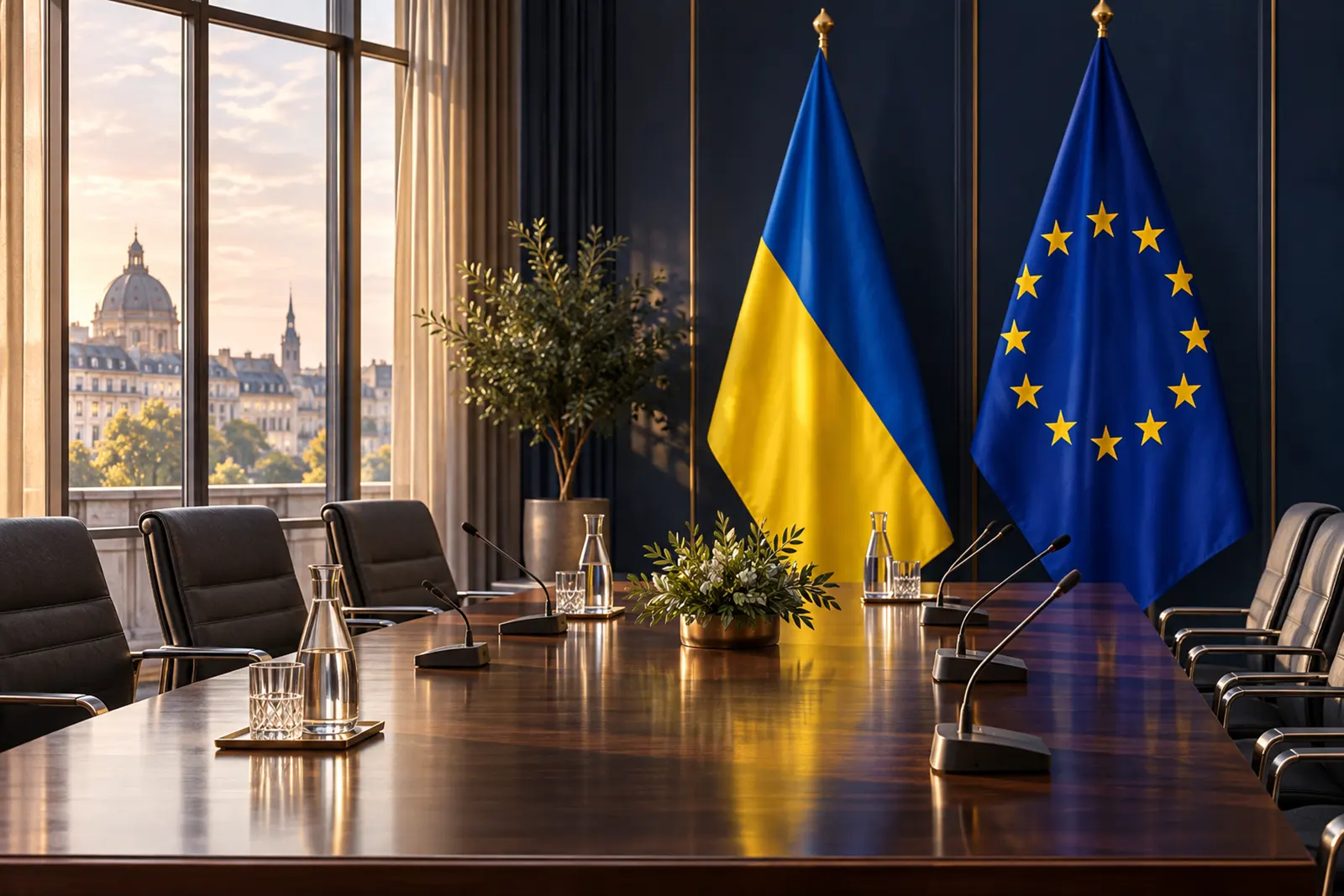
European participation in Ukraine peace talks is set to become a central issue in the next round of US-brokered negotiations, after American envoys met Russian President Vladimir Putin in Moscow and Ukrainian President Volodymyr Zelenskyy in Dublin on November 12, 2026. US negotiators say European representatives will be included, although major disagreements over territory and security remain unresolved.
The latest diplomatic push follows November 10–11 talks in Abu Dhabi involving Russia, Ukraine and the United States. Those discussions produced plans for a prisoner exchange but no publicly announced comprehensive ceasefire or peace settlement.
Ukraine Peace Talks: What Changed for Europe?
US envoy Steve Witkoff said European partners would take part in the next negotiating meeting. Zelenskyy welcomed the prospect of wider participation and called for discussions to address ceasefires and de-escalation. The timing, format and precise European representation have not yet been fully settled publicly.
The announcement matters because European governments are central to any lasting security arrangement, reconstruction financing and sanctions policy. Their inclusion could broaden the discussion, but a seat at the table does not mean the parties have agreed on the terms of a settlement.
Abu Dhabi Talks and the Proposed Prisoner Exchange
Negotiators met in Abu Dhabi on November 10 and 11, their first such round in nine months, according to Reuters. The meetings helped advance plans for another prisoner-of-war exchange. US envoy Jared Kushner said Washington was pursuing a potentially very large exchange, but the number, schedule and implementation still require confirmation.
Humanitarian exchanges can produce concrete outcomes even when political negotiations remain deadlocked. They should not be confused with a comprehensive agreement to end the fighting. For background, see our earlier preview of the Abu Dhabi peace talks.
Territory, Ceasefire and Security Guarantees Remain Obstacles
Russia continues to demand territorial concessions, including control over the remaining Ukrainian-held parts of Donbas, while Kyiv rejects surrendering that territory. Putin also reiterated opposition to foreign troops being deployed in Ukraine as part of postwar arrangements. Those positions underscore the distance between the parties.
A ceasefire would require workable monitoring and enforcement arrangements, while longer-term security guarantees would need agreement among Ukraine and its partners. European governments have also raised concerns about discussing a broader continental security framework before there is meaningful progress toward stopping the war.
Why Investors and Businesses Are Watching
A credible reduction in hostilities could affect European energy-security expectations, reconstruction planning, transport routes and risk sentiment. Conversely, renewed escalation or prolonged uncertainty may keep geopolitical risk premiums elevated. These are possible channels of impact, not forecasts of specific asset-price moves.
Investors should distinguish diplomatic statements from signed and implemented agreements. Confirmation of a ceasefire, verified prisoner exchanges and detailed security commitments would be more substantive milestones than optimistic headlines alone.
How to Assess Progress in Ukraine Peace Talks
For Ukraine peace talks, European participation is one element of a broader process. Readers can assess progress by separating proposed meeting formats, negotiated commitments and verified implementation. An announced discussion does not itself establish an enforceable ceasefire. Likewise, a humanitarian agreement may help people directly while leaving territorial and security disputes unresolved. Clear reporting should identify who has confirmed each development and which questions still require agreement.
Bottom Line
The prospect of European participation gives the Ukraine negotiations a broader diplomatic format. Yet territorial demands, credible security guarantees and an actual ceasefire remain unresolved. The next test is whether the parties can turn announcements into verifiable steps.
Sources
Reuters — Putin lets Europe join Ukraine peace talks (November 12, 2026)
Reuters — Prisoner swap agreement after Abu Dhabi talks (November 11–12, 2026)
Associated Press — US envoys meet Putin and Zelenskyy (November 12–13, 2026)
Financial disclaimer: This article is for informational and educational purposes only and does not constitute investment advice. Political developments and market conditions can change rapidly. Consider your own circumstances and seek qualified professional advice before making financial decisions.