






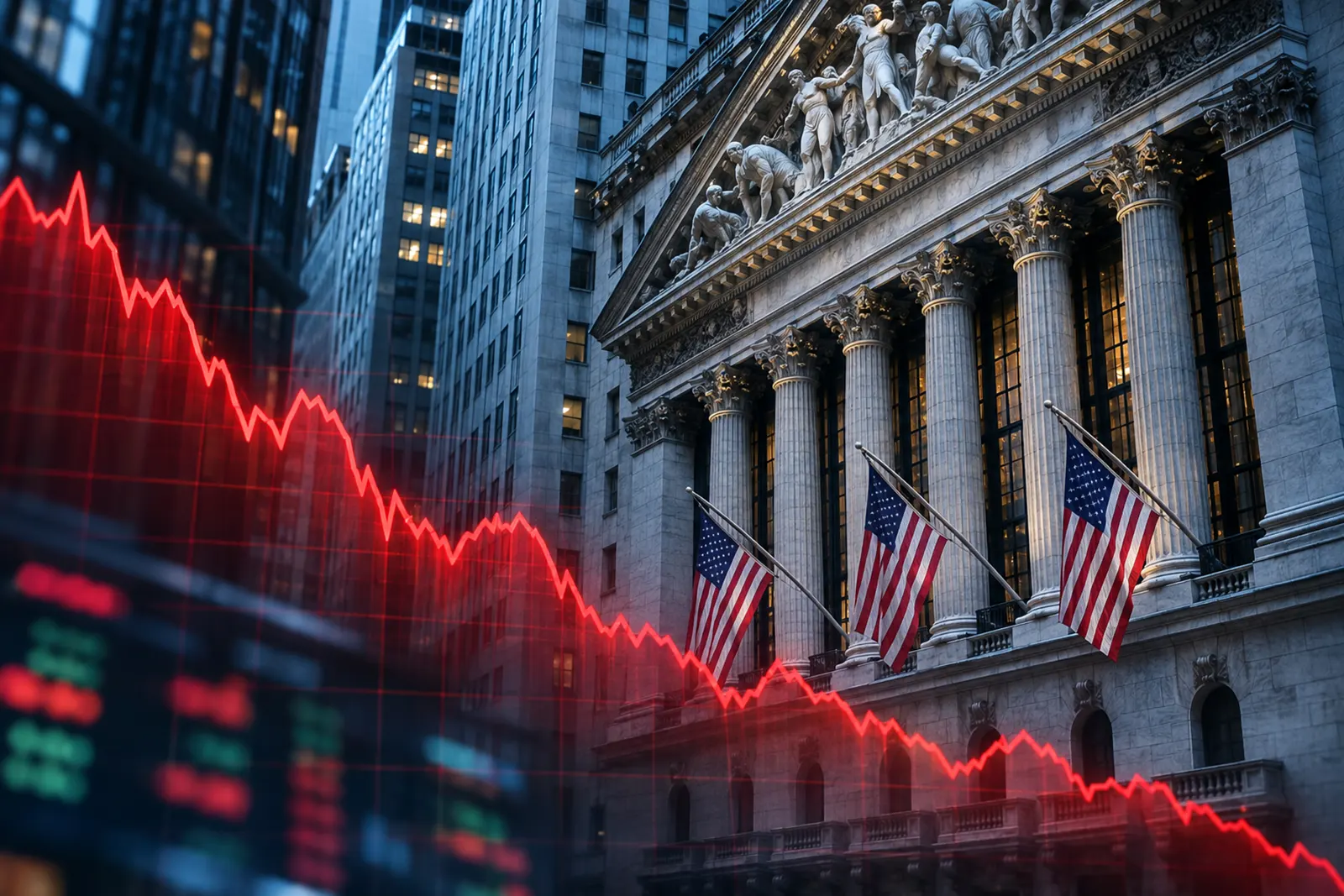
Wall Street inflation selloff weighed on US equities on Tuesday, November 10, 2026, after a hotter-than-expected inflation report raised concerns about further Federal Reserve rate increases. The S&P 500 ended 0.4% lower, interrupting Monday’s broad rebound.
According to Associated Press closing-market figures, the S&P 500 finished at 7,520.93, the Dow Jones Industrial Average fell 0.3% to 52,231.89, and the Nasdaq Composite lost 0.7% to 25,065.87. These are November 10 closing figures, not live November 11 prices.
Wall Street Inflation Selloff: Major Indexes Retreat
The Russell 2000 also fell 0.7%, ending at 2,821.38. The decline followed a strong Monday session in which the S&P 500 gained 2.35% and the Nasdaq advanced 2.74%, according to Reuters. The contrast illustrates how quickly expectations can change when fresh economic data arrives.
Despite Tuesday’s losses, AP reported that the S&P 500 and Nasdaq were still approximately 2% higher for the week at that point. A single negative session therefore needs to be evaluated alongside the wider trading trend.
Inflation and Treasury Yields Pressure Valuations
The October inflation release exceeded economists’ expectations, prompting investors to reassess the possible size of a December Fed rate increase. The benchmark 10-year Treasury yield rose to around 4.99%, according to AP’s November 10 market report.
Higher bond yields can make future corporate earnings less valuable in present-value terms, a particular challenge for growth-oriented stocks. Rising financing costs may also weigh on housing-related businesses and highly leveraged companies.
For related background, see Temel Academy’s analysis of December Fed rate-hike expectations. The direction of interest-rate policy remains uncertain and depends on incoming data and central-bank decisions.

Nvidia and Technology Shares Add to Market Weakness
Technology stocks faced additional pressure. AP reported that Nvidia declined 5.5% on Tuesday amid company-specific scrutiny and broader questions about AI-sector valuations. Reuters also highlighted weakness across AI-linked shares as investors weighed high capital spending against future earnings potential.
Not every AI-related company faces the same risks. Investors may distinguish between profitable hardware suppliers, infrastructure providers with heavy financing needs, and businesses still working to monetize AI products. For context on the recent technology downturn, read our coverage of AI-stock pressure on the Nasdaq.
What Investors Should Watch Next
The next important tests include subsequent inflation releases, Federal Reserve commentary, Treasury-yield movements and corporate earnings. A sustained rise in yields could continue to challenge equity valuations, while signs of cooling inflation might reduce pressure on rate-sensitive sectors.
Market breadth matters too. Traders can compare the performance of large technology names with smaller companies, industrials and defensive sectors. They should also watch whether the S&P 500 can hold nearby support areas rather than treating one day’s price move as a definitive trend signal.
Reading the Wall Street Inflation Selloff
The Wall Street inflation selloff highlights the difference between a daily catalyst and a lasting change in trend. A useful review separates interest-rate expectations, company-specific news and broader market participation. Comparing closing prices with intraday moves can also reveal whether initial selling persisted through the session. These checks provide context without assuming that the next inflation release or trading day will produce the same response.
Bottom Line
The November 10 Wall Street inflation selloff reflected a combination of stronger price pressures, rising Treasury yields and renewed weakness in major technology stocks. The retreat did not erase Monday’s rally, but it underscored the market’s sensitivity to interest-rate expectations.
Sources
Associated Press — How major US stock indexes fared Tuesday (November 10, 2026)
Associated Press — US stocks slip following inflation update (November 10, 2026)
Reuters — Wall Street ends lower on inflation and Fed worries (November 10, 2026)
Financial disclaimer: This article is for general information and education, not investment advice. Prices, yields and economic expectations can change. Assess your own circumstances and consult a qualified professional where appropriate.